Start with the way you eat.
Set your dates, number of people and meals to include. Add your eating style, foods you enjoy or dislike, ingredients to avoid, and any cooking-time preference. The planner uses these details to suggest meals; you choose which recipes enter the plan.
Review recipe ingredients and product labels yourself, especially where allergies or strict dietary restrictions matter. Suggestions and nutrition estimates do not verify allergen safety.
Plan tomorrow’s lunch with tonight’s dinner.
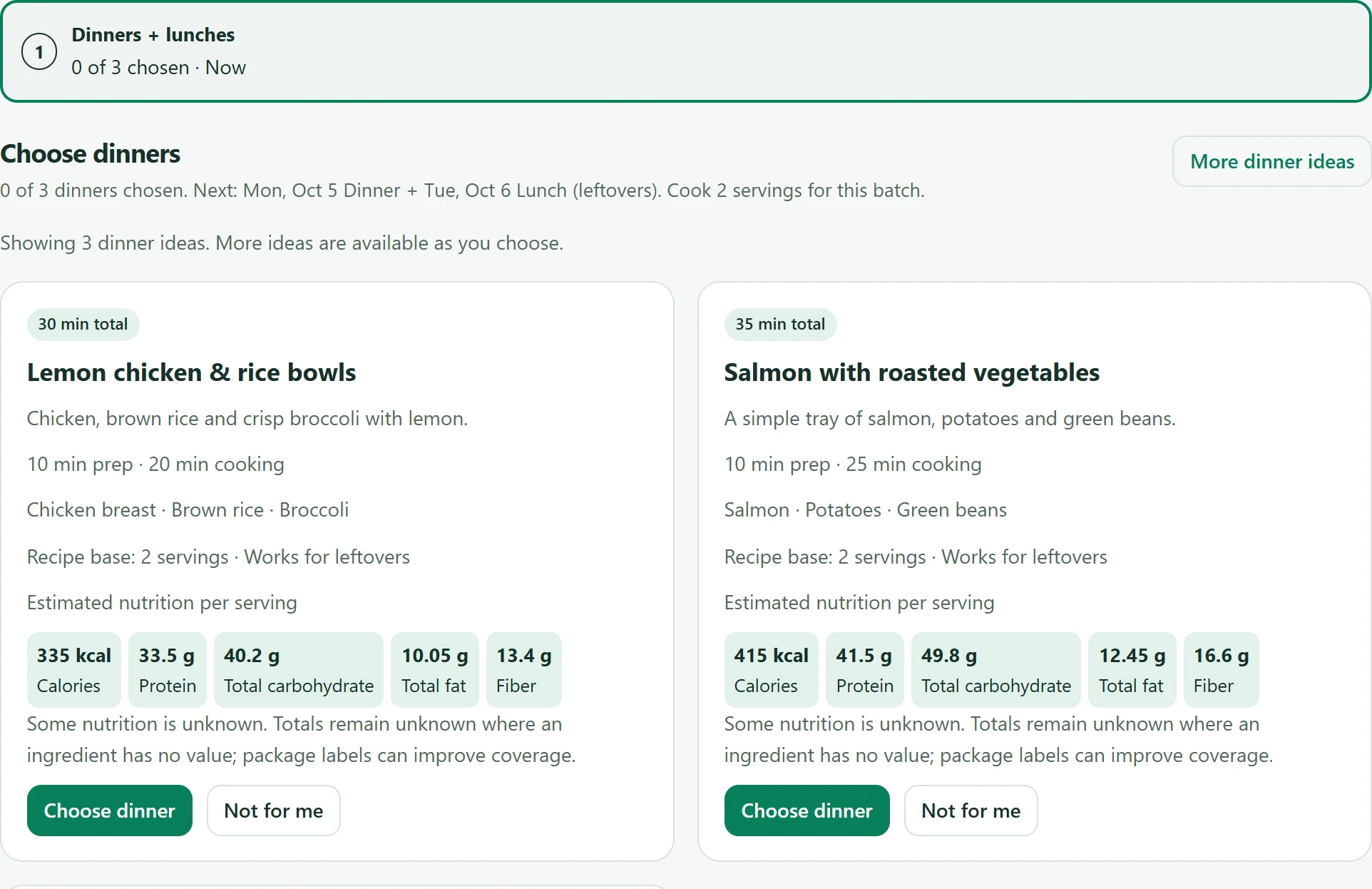
When you choose dinner leftovers for lunch, the planner reserves extra portions from eligible dinners for the following day within your selected dates. Dinner and its paired lunch share a cooking batch.
Lunch portions are food to set aside, not another recipe to cook. You can also plan lunches separately. Review the schedule to check which dinners and lunches are paired.
For example
For one dinner portion and one next-day lunch portion, cook two portions in the shared batch.
Review your choices before you shop.
Change a meal, adjust its date or servings, and review the full schedule before opening the shopping list. The list combines ingredients for your chosen meals and portions.
Check your pantry, tick off purchases, and open an item’s details when you need exact recipe quantities. Package sizes and produce counts are shopping estimates; match the ingredient and package size in the store.
Keep cooking help connected to the meal.
Focus on a recipe when you ask for cooking help, and attach a meal photo if it helps explain your question. The conversation can stay tied to that meal. Proposed plan changes can be reviewed before applying them.
When you cook, record the batch yield and, optionally, its finished weight. Review the portion you ate before adding it to your diary. Planning a meal does not mean you have eaten it.
How recipe and portion estimates work